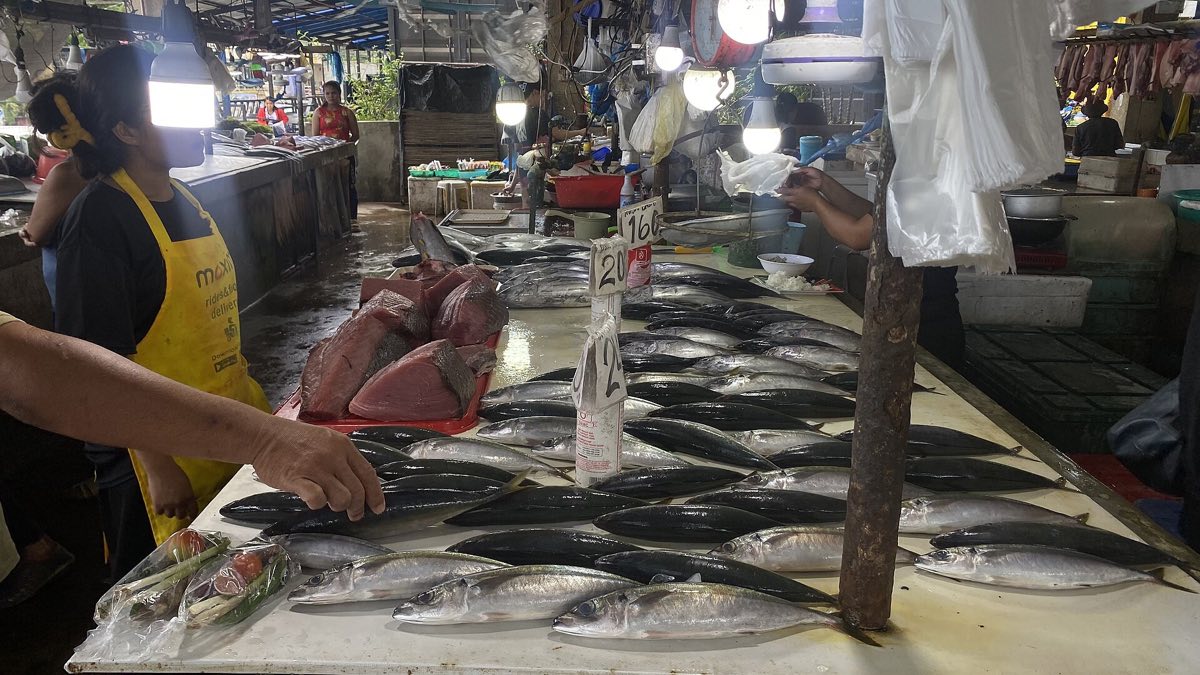
Paluto: buy the fish raw, pay someone to cook it
Paluto means you buy the seafood raw and pay a stall to cook it. The tourist-usable cluster is the "Paluto sa Puerto" dampa-style stalls along the Baywalk, about 10 minutes by tricycle from the centre. Fish runs ₱150–400 a kilo, large shrimp about ₱600 a kilo, and the cooking fee is ₱100–150 per dish per style — grilled, buttered-garlic, sinigang or kinilaw. All in that is ₱300–500 a person (~$5–9), against ₱1,150 for a seafood platter at Badjao. Bring cash and go hungry.
Four steps and one decision
There is no menu, no waiter and no fixed price. There is a counter of ice with fish on it and a woman with a grill, and that is the entire system.
One: pick your seafood from the ice. Fish is sold by the kilo at ₱150–400 depending on species, large shrimp at about ₱600/kg, and squid, crab and shellfish by weight too. Ask the price per kilo before it goes on the scale, every time — this is the one part of the transaction where being obviously foreign costs money. Two: say how you want each item cooked. Grilled (inihaw), buttered-garlic, sinigang or raw as kinilaw are the four standard answers.
Three: pay the cooking fee, ₱100–150 per dish per style. Splitting one kilo of fish into two styles counts as two dishes, and it is worth it. Four: sit down, order rice and drinks separately, and wait 15–25 minutes. A table of two eating a kilo of fish two ways with rice comes to roughly ₱800 in total.
The decision is where to buy. Buying at the stall itself is easiest and slightly dearer. Buying at the public market and carrying it to a stall or a small eatery is cheaper and more work. Neither is wrong, and the difference across a whole dinner is perhaps ₱150.
Badjao is not a paluto restaurant
This gets conflated constantly, including by guides that should know better, and it leads people to the wrong building with the wrong expectations.
Badjao Seafront is a menu restaurant with printed prices, on Abueg Road, over the water. You order dishes at ₱125–550 and a platter at ₱1,150; you do not buy fish by the kilo and you do not pay a cooking fee. It is a fine sunset dinner and it is a different product entirely.
Paluto happens at the Baywalk dampa stalls and around the public market. It costs roughly a third of what the same seafood costs on a restaurant menu, it takes place on plastic chairs, and it is where locals go. If someone told you Puerto Princesa's paluto is at Badjao, they have never done either.
Paluto against a restaurant platter
Two people, one kilo of fish cooked two ways, rice and drinks, and the tricycle both directions. Compare it against the single most popular seafood order in the city.
₱800 for two, about ₱400 each. A whole kilo of fish, grilled and in sinigang, rice, drinks and the ride. Add ₱300 and you are eating large shrimp as well. You pick the fish, you choose the cooking, and you eat outdoors 20 metres from the water.
A dining room on stilts over Honda Bay, a sunset, table service and a kitchen that rates 3.9/5 from about 860 reviews. Cash only, and the tricycle charter with waiting is another ₱300–500.
See BadjaoVerdict. Paluto wins on food and money; Badjao wins on the view. Do paluto for the seafood and see the sunset from the free Baywalk, which faces the same water.
The four places, compared
One of these is for tourists, one is for cooks, one is unverified and one may not be running this week. Read the status column before you get in a tricycle.
| Where | What it is | Hours | Prices | Verdict |
|---|---|---|---|---|
| "Paluto sa Puerto" / Baywalk dampa stalls the tourist-usable cluster, 10 min by tricycle from the centre | Buy raw off the ice and have it cooked on the spot, on plastic chairs by the sea | From about 17:00 to midnight | Fish ₱150–400/kg · cooking ₱100–150 a dish · ₱300–500 all in | WORTH IT |
| Puerto Princesa Public Market / San Jose New Market San Jose district, about 5 km north · 4/5 from 243 reviews | The big wet market. Cheapest raw prices, plus dried fish, roasted cashews and souvenirs. Small eateries nearby will cook what you buy | About 05:00–19:00, freshest early | Large shrimp ~₱600/kg · haggle · cash only | WORTH IT |
| The Old Market, Malvar Street still preferred by some locals for dried fish | Smaller, older, central. Current state UNVERIFIED — worth a look if you are passing, not a trip | UNVERIFIED | Dried fish and dry goods mainly | DEPENDS |
| The Rizal Avenue night market the city has run one and announced plans to make it regular | Street food rather than paluto proper. Schedule UNVERIFIED — likely weekends 18:00–24:00 | Verify day-of | Street-food prices, ₱15–200 a plate | DEPENDS |
Everything on this table is cash. The market floors are wet and slippery, the Baywalk has raised flooring that is easy to trip on in dim light, and neither has an ATM worth relying on.
The Baywalk stalls, in practice
The public market, in practice
What is worth booking, and what is not
Paluto is a walk-up, cash, no-booking experience and should stay that way. These are the adjacent things worth a click.
Paluto questions, answered
What is paluto?
A system, not a restaurant: you buy seafood raw by the kilo and pay a stall a fee to cook it however you want. Fish runs ₱150–400/kg, the cooking fee is ₱100–150 per dish per style, and a full meal lands at ₱300–500 a person. It is the best-value seafood in Puerto Princesa.
Where is the best paluto in Puerto Princesa?
The "Paluto sa Puerto" dampa-style stalls along the Baywalk, about 10 minutes by tricycle from the centre, running from around 17:00 to midnight. For cheaper raw prices, buy at the public market in San Jose, open about 05:00–19:00, where small eateries nearby will cook your purchases.
How much does a paluto dinner cost?
About ₱300–500 a head. A worked example: a kilo of fish at ₱250, ₱250 in cooking fees for two styles, ₱150 for rice and drinks and ₱150 for the tricycle both ways comes to ₱800 for two people. The same seafood as a Badjao platter is ₱1,150 before rice.
Is Badjao Seafront a paluto restaurant?
No. Badjao is a menu restaurant with printed prices from ₱125–550 and a ₱1,150 platter, on Abueg Road over the water. Paluto is the Baywalk stalls and the market. The two get conflated constantly and they are completely different meals at completely different prices.
Is the Baywalk street food safe to eat?
Generally yes, with the usual rule: pick stalls with visible turnover where food is cooked to order in front of you. A January 2025 review says the area should be kept cleaner, which is fair. Grilled squid runs ₱100–200 and pork barbecue sticks ₱15.
What time do the Baywalk food stalls open?
From about 17:00–18:00, running to roughly midnight. Arrive 19:30–20:00 for the best atmosphere and expect to wait for a seat. Watch the unmarked raised flooring in dim light — an April 2024 review flagged it as a trip hazard and it still is.
Is there a night market in Puerto Princesa?
The city has run one in the Rizal Avenue area and has announced plans to make it a regular feature, but the exact current schedule is unverified — most likely weekends, roughly 18:00–24:00. Verify on the day rather than planning an evening around it.
Do I need to haggle at the market?
For dried fish, roasted cashews at ₱100–300 a pack and souvenirs, yes — it is expected. For fresh fish the per-kilo price is the price, but ask for it before anything goes on the scale. Bring small notes; nobody at a 06:00 wet market wants a ₱1,000 bill.
Cash, plastic and wet floors
Three things that catch people out at markets and stalls here, none of them dramatic and all of them avoidable.
Draw cash in the city, and draw more than feels reasonable. Tours, tricycles, markets and most restaurants are cash. Foreign cards are charged about ₱250 per withdrawal at nearly every bank and per-transaction limits run ₱10,000–20,000. Airport machines empty at weekends and around the 15th and 30th. Sabang is effectively an ATM desert — arrive with the whole stay in your pocket. Always decline the machine's offer to charge you in your own currency.
Puerto Princesa's single-use plastics ban has been enforced with fines since 16 April 2024 — bags, cups, straws, cutlery, stirrers and styrofoam, ₱1,000 rising to ₱5,000 and loss of business permit. Nobody will hand you a plastic bag. Bring a tote and a refillable bottle; the tap water is not drinkable but refill stations are everywhere.
And the boring one: the market floors are wet and slippery from 05:00 onwards and the Baywalk's raised flooring is not lit or marked. Closed shoes at the market, and look down when you are carrying two plates and a beer.
Continue planning
Eat it with a local
Puerto Princesa food tours & tastings — guided street-food crawls and cooking classes with vetted operators, most with free cancellation.