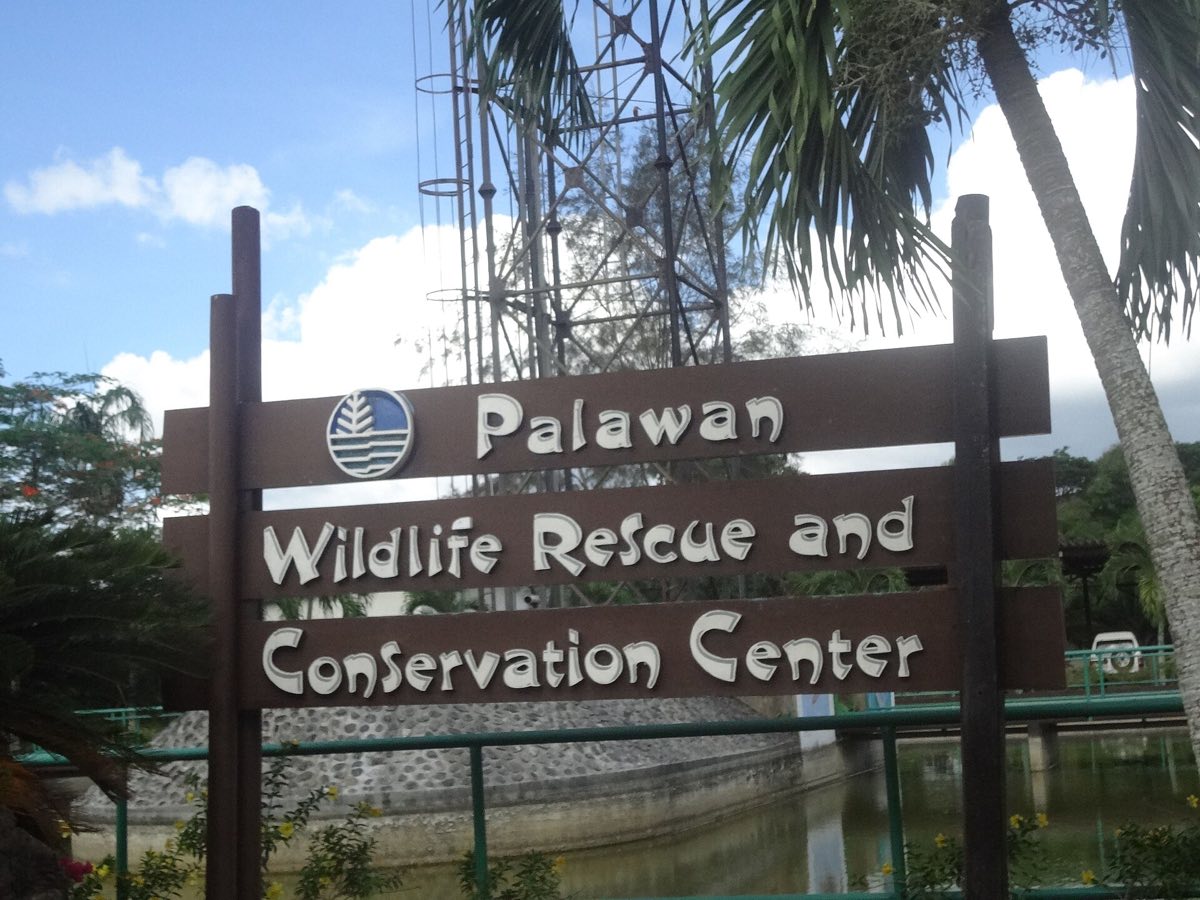
The Palawan Wildlife Rescue Center, honestly
It is a genuine government breeding programme and it looks like a small zoo, and both of those things are true at once. Properly the Palawan Wildlife Rescue and Conservation Center, established in 1987 as a Japan-assisted crocodile institute and now run by the DENR, it breeds the critically endangered Philippine crocodile alongside saltwater crocodiles, hornbills, mynahs and bearcats. It is 30 to 45 minutes south in Brgy. Irawan, open 08:00 to 17:00, and takes 45 to 60 minutes. Entrance is reported as free by one source and around ₱40–50 by others — verify at the gate. Decline the baby-crocodile photo op.
A breeding programme, not an attraction that grew one
The name on the gate matters. This is not a crocodile farm in the leather sense, and it is not a wildlife park in the safari sense.
The centre opened in 1987 as a Japan-assisted crocodile research institute and is now run by the Department of Environment and Natural Resources. Its core work is captive breeding of the Philippine crocodile, Crocodylus mindorensis, which is critically endangered and endemic to this country — one of the most threatened crocodilians in the world. Saltwater crocodiles are held alongside them, and the site also takes in rescued and confiscated wildlife: hornbills, mynahs and bearcats among them.
A visit is a guided walk past the breeding pens in weekday batches, the confiscated-wildlife enclosures, and the lobby display — which is where the skin and skeleton of a roughly 5 metre saltwater crocodile caught in Palawan is mounted. That display is real and it is the thing most visitors remember. A popular nickname for the animal circulates online; we could not verify it against any primary source, so this page does not print it as fact.
It takes 45 to 60 minutes. It holds 575 TripAdvisor reviews, it is the anchor stop on the half-day city tour, and it is the only stop on that loop with substance behind it.
What to expect, and what to decline
This site flags the judgement calls instead of making them for you: the crocodile farm is a genuine government breeding and rescue facility with small enclosures and a baby-crocodile photo op you can decline; the Butterfly Garden's Palaw'an demonstrations are paid, consensual and income-generating but read as zoo-adjacent to some visitors; and at Iwahig, inmates perform for tips. Buy the handicrafts, ask before photographing anyone, and skip anything that sits wrong with you.
The honest description: this is a working conservation and rescue facility with a real educational mission, housed in zoo-like enclosures that are small by modern standards, and with a history of crocodile-leather livelihood programmes in its background. Animal-welfare-sensitive visitors should calibrate before they walk in rather than after.
Skip the baby-crocodile photo op. It costs around ₱30–50, it has operated on and off, and it is the one element of the visit that is purely for the tourist and does nothing for the animal. Declining it costs you nothing and no one will make it awkward. If you are here with children, that is a decision worth making out loud in front of them.
We could not reach a current reviews page for the centre specifically on animal welfare, so we are not printing a claim we cannot source. What we can point at is the parallel: reviewers at Baker's Hill, the other city-tour stop with caged animals, described the conditions there as appalling in December 2023 and again in March 2026. Treat that as a reason to look carefully rather than as evidence about this site.
What you actually see, stop by stop
A guided loop of about 45 minutes. This is what is on it, and what each part is worth.
| What | Cost | Notes | Verdict |
|---|---|---|---|
| Philippine crocodile breeding pens the reason the place exists | included | Critically endangered, endemic, and one of the most threatened crocodilians anywhere. The conservation case for this visit sits entirely here | WORTH IT |
| The 5-metre saltwater crocodile display skin and skeleton, in the lobby | included | Caught in Palawan and mounted. The thing every reviewer remembers. A popular nickname circulates online and is unverified | WORTH IT |
| Saltwater crocodile pens the big ones | included | Enclosures are small by modern standards. This is where welfare-sensitive visitors will make up their minds | DEPENDS |
| Rescued and confiscated wildlife hornbills, mynahs, bearcats | included | Animals seized from the wildlife trade, which in Palawan is a serious and growing problem. Educational and uncomfortable in equal measure | DEPENDS |
| Baby-crocodile photo op holding a juvenile for a picture | ~₱30–50 unverified | Operates on and off. Purely for the visitor, does nothing for the animal. Declining is easy and normal | SKIP |
| The souvenir counter at the exit | varies | Never buy anything made from wildlife anywhere in Palawan, here or otherwise. The province is the country's pangolin trafficking frontier | SKIP |
Read the review record on TripAdvisor — 575 reviews — and see the crocodile meat page for where the sisig at Kinabuchs actually comes from.
Nobody will tell you the price
Several entrance fees on the city-tour circuit are not published anywhere current — the crocodile farm (free in one source, about ₱40–50 in others), Plaza Cuartel, the Heritage Center and the Butterfly Garden all carry conflicting 2026 figures. Where that is the case this site gives the range and tells you to ask at the desk, rather than printing a number that will be wrong.
For this site specifically: one source states entrance is free, and several others report tours historically collecting around ₱40–50. Neither is confirmed for 2026, and the same applies to the ₱30–50 baby-crocodile photo fee. Bring ₱200 in small notes, ask at the gate, and do not be surprised either way.
The other unresolved question is Sunday. Published hours are 08:00 to 17:00 daily, and some sources note weekday guided-tour batches with a possible Sunday closure. We could not confirm it. If Sunday is your only day, phone ahead through your hotel rather than paying ₱600 in tricycle fare to find out.
The feeding-viewing schedule is in the same category. Historically there have been limited feeding viewings rather than daily shows; any guide that promises you a feeding show at a specific time is guessing. What has closed and changed collects the rest of these.
The practical bit
Why Palawan has a wildlife-rescue problem in the first place
The confiscated animals in those enclosures are the visible end of the largest wildlife trafficking problem in the Philippines.
Palawan is the country's endemic-species ark and its trafficking frontier at the same time. The Palawan pangolin — endemic to this island, from the most trafficked mammal family on earth — is the grim flagship: researchers estimate around 26,800 are illegally hunted per year in Palawan, with seizures rising roughly nine-fold between 2018 and 2019 against the previous two decades. Meat and scales move to Manila and beyond. A 25-year conservation strategy has been published by the Katala Foundation and others.
The traveller-facing version is short. Never buy wildlife products in Palawan, in any form, including things that look like handicrafts. Report anything you are offered. And be aware that most visitors have no idea Palawan has its own pangolin species at all — which is a large part of the problem. Note also that there is no pangolin exhibit here or at the Butterfly Eco-Garden, whatever some listings imply.
Crocodile meat is a different question and it is not a conservation one. The crocodile sisig at Kinabuchs, at ₱350–600, is farmed saltwater crocodile from this facility's commercial side, not wild-caught and not the endangered species. The full explanation is here, because it is the single most-asked question about eating in this city.
It is easiest as part of the loop
Brgy. Irawan is 30 to 45 minutes out on the South Road, so this is an awkward standalone trip and a natural tour stop. Local city tours run ₱600–900 and include it.
Crocodile farm questions, answered
Is the Puerto Princesa crocodile farm worth visiting?
For families and anyone interested in Philippine wildlife, yes — it is the only city-tour stop with real substance, and it breeds the critically endangered Philippine crocodile. Skip it if small enclosures will ruin your afternoon. It takes 45 to 60 minutes and holds 575 TripAdvisor reviews.
How much is the crocodile farm entrance fee?
Genuinely unclear. One source says free and several report around ₱40–50 historically collected on guided tours. No 2026 figure is published anywhere current, so bring ₱200 in small notes and ask at the gate rather than trusting a blog.
What are the crocodile farm opening hours?
08:00 to 17:00. Guided visits run in batches on weekdays. Some sources report a Sunday closure and we could not confirm it — if Sunday is your only day, have your hotel phone ahead before you spend ₱600 on tricycle fare.
Is the crocodile farm ethical?
It is a real DENR conservation and rescue facility established in 1987, breeding a critically endangered endemic species and housing confiscated wildlife — and the enclosures are small by modern standards. Decline the ₱30–50 baby-crocodile photo op, which serves no purpose but the photograph.
Can you hold a baby crocodile there?
It has operated on and off at around ₱30–50, and this site suggests you skip it. It is the one element of the visit that exists purely for the visitor. Nobody will make it awkward if you decline, and if you are with children it is worth saying why out loud.
Is the crocodile sisig at Kinabuchs from this farm?
Yes — it is farmed saltwater crocodile from the commercial side of this facility, not wild-caught and not the endangered Philippine crocodile. It runs ₱350–600 at Kinabuchs on Rizal Avenue, which opens 16:00–17:00 and closes between 23:00 and 01:00.
How far is the crocodile farm from Puerto Princesa?
Brgy. Irawan is on the South Road, 30 to 45 minutes from the city centre. There is no practical public transport, so it is either the city tour or a tricycle charter at ₱600–1,200 for the half day — which is why almost everyone sees it on the van.
Is there a pangolin at the crocodile farm?
No, and there is none at the Butterfly Eco-Garden either. Palawan has its own endemic pangolin, with an estimated 26,800 illegally hunted each year, but you will not see one in captivity here. Never buy wildlife products anywhere in the province.